
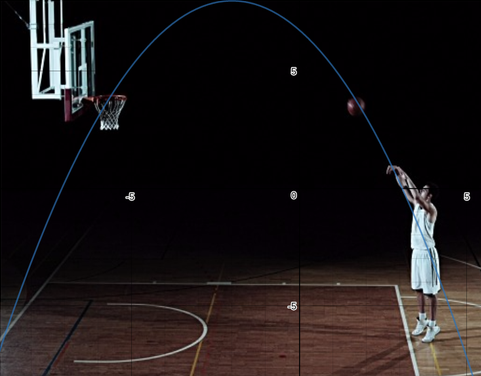
Quadratic functions are one of the most important topics in algebra. They show up in classrooms everywhere and in real life more often than you might think. If you have ever noticed the arc of a basketball shot, the curve of a rollercoaster, or the shape of a satellite dish, you have seen a quadratic in action.
This guide will walk you through what quadratic functions are, why they matter, and how to work with them step-by-step. Whether you are a student learning this for the first time or a parent brushing up to support your child, you will find everything you need right here.
A quadratic function is a function that involves a variable squared, such as x2. Mathematicians call these second-degree functions because the highest power of the variable is 2.
The general form of a quadratic function looks like this:
Where:
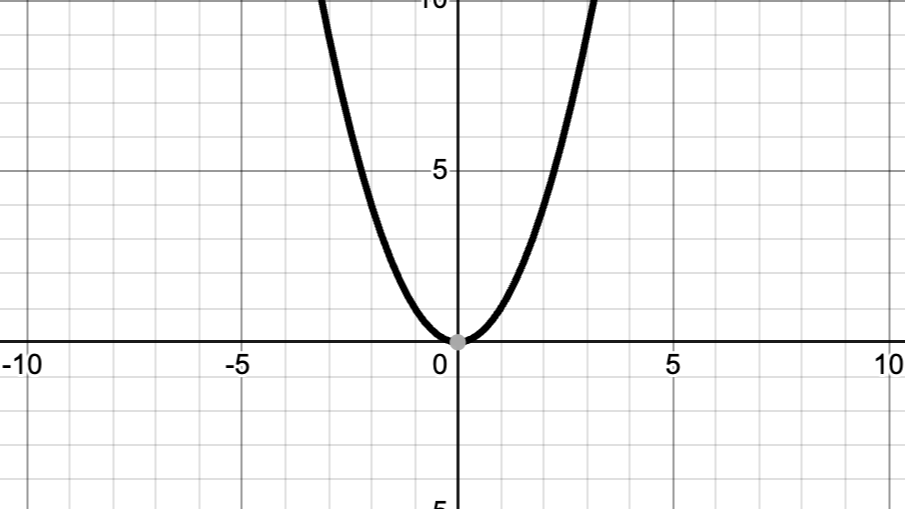
When graphed, a quadratic function creates a U-shaped curve called a parabola.
If a > 0, the parabola opens upward, like a smile.
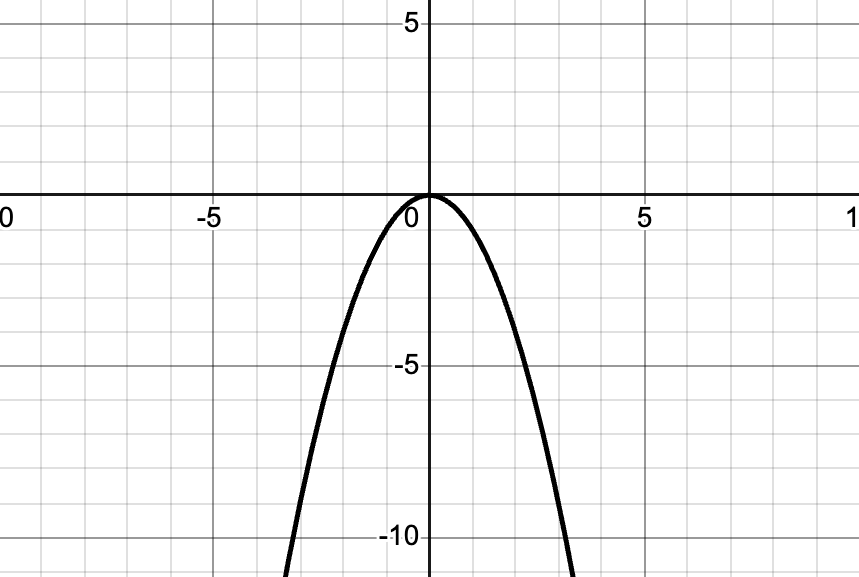
If a < 0, the parabola opens downward, like a frown.
There are several ways to solve quadratic functions, which means finding the roots or zeros.
Example:
x² − 5x + 6 = (x − 2)(x − 3)
So the roots are:
x = 2 and x = 3
2. The Quadratic Formula
The quadratic formula works for any quadratic function.
x = (−b ± √(b² − 4ac)) / (2a)
The ± symbol means there are usually two solutions: one using addition and one using subtraction.
This method is useful for rewriting a quadratic in vertex form and understanding how the graph shifts.
By graphing the parabola, you can visually identify the vertex and the roots.
It is normal to make mistakes when first learning quadratics. Here are a few to watch out for:
Quadratic functions are not just abstract math problems. They describe real situations such as:
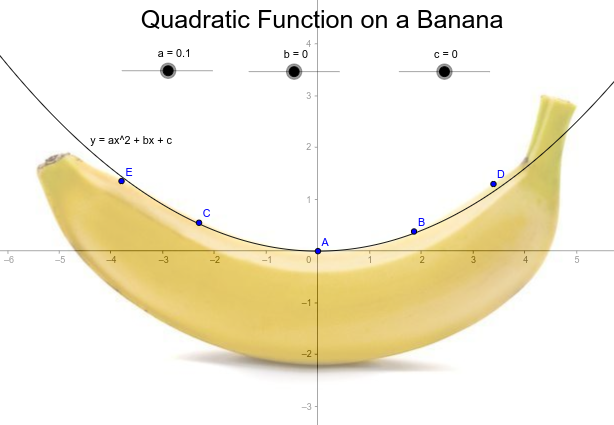
Quick challenge: Can you think of one place in your daily life where you see a parabola? Try writing it down or sketching it. Connecting math to the real world makes it easier to remember.
Learning quadratics takes practice, but every step strengthens your problem-solving skills. Start with the basics, use different methods when appropriate, and always check your work. Over time, these equations become much more manageable.
At StarSpark, we know concepts like quadratics can feel overwhelming. That is why we built an AI Math Teacher that:
Try StarSpark free for 14 days and see how much easier quadratics and all of math can feel with the right support.
What is a quadratic function in simple terms?
A quadratic function is a mathematical function where the variable is squared, like x². When you graph it, it creates a U-shaped curve called a parabola.
Why are quadratic functions called second-degree functions?
Quadratic functions are called second-degree because the highest power of the variable is 2. The degree of a function is determined by the largest exponent.
What does the “a” value do in a quadratic function?
The value of a controls how the parabola opens. If a is positive, the parabola opens upward. If a is negative, the parabola opens downward. It also affects how wide or narrow the graph is.
What is a parabola?
A parabola is the U-shaped graph formed when a quadratic function is plotted. Every quadratic function produces a parabola.
What are the roots or zeros of a quadratic function?
Roots, also called zeros, are the x-values where the quadratic function equals zero. These are the points where the parabola crosses the x-axis.
How do you solve a quadratic function?
Quadratic functions can be solved in several ways, including factoring, using the quadratic formula, completing the square, or graphing. The method you choose depends on the problem.
When should you use the quadratic formula?
You should use the quadratic formula when a quadratic equation cannot be easily factored. The quadratic formula works for every quadratic equation.
What does the ± symbol mean in the quadratic formula?
The ± symbol means there are usually two solutions, one found by adding and one found by subtracting. This is why most quadratic equations have two answers.
What is the vertex of a quadratic function?
The vertex is the turning point of the parabola. It represents the maximum or minimum value of the quadratic function, depending on how the parabola opens.
Why are quadratic functions important in real life?
Quadratic functions model real-world situations such as the path of a thrown object, the arc of a basketball shot, and designs in engineering, like bridges and satellite dishes.
Is learning quadratics important for future math?
Yes. Quadratic functions are a foundational topic that appears in algebra, geometry, physics, calculus, and standardized tests. Understanding them makes future math much easier.
Start learning with StarSpark today.
Free for 14 days, no credit card needed.