

If You’ve Looked Into Khanmigo Recently, You’re Not Alone
Over the past few years, AI has steadily made its way into the classroom, promising to change how students learn, study, and get help when they need it most.
Khanmigo was one of the first widely recognized tools to bring that vision to life. It gave students a way to ask questions, get explanations, and interact with an AI directly inside the Khan Academy experience. For many families, it felt like a meaningful step forward.
But more recently, something has shifted.
Students, parents, and even educators have started asking a more grounded question, one that goes beyond the excitement of new technology:
Is this actually helping students learn, or just helping them get through assignments?
At the same time, conversations across the education space suggest that Khanmigo may be evolving or quietly being deprioritized within the broader Khan Academy platform. Whether or not that shift is permanent, it has pushed many families to look more closely at what they actually need from an AI learning tool.
What’s Happening With Khanmigo?
While Khanmigo still appears within parts of Khan Academy, its role seems less central than originally expected.
More importantly, reflections from Khan Academy leadership point to a deeper challenge that extends beyond any single product.
In a recent interview, Sal Khan shared:
“For a lot of students, it was a non-event… they just didn’t use it much.”
That’s a striking admission, especially considering the expectations that surrounded AI in education just a few years ago.
In a similar vein, Khan Academy leadership has acknowledged:
“So far, I am not seeing the revolution in education.”
Taken together, these statements highlight something that often gets overlooked when new technology enters the market.
It’s not enough for a tool to be available, or even impressive on the surface. If students don’t return to it consistently, its impact remains limited.
And that’s where many early AI learning tools have quietly struggled.
The Real Issue Isn’t AI. It’s How Students Use It.
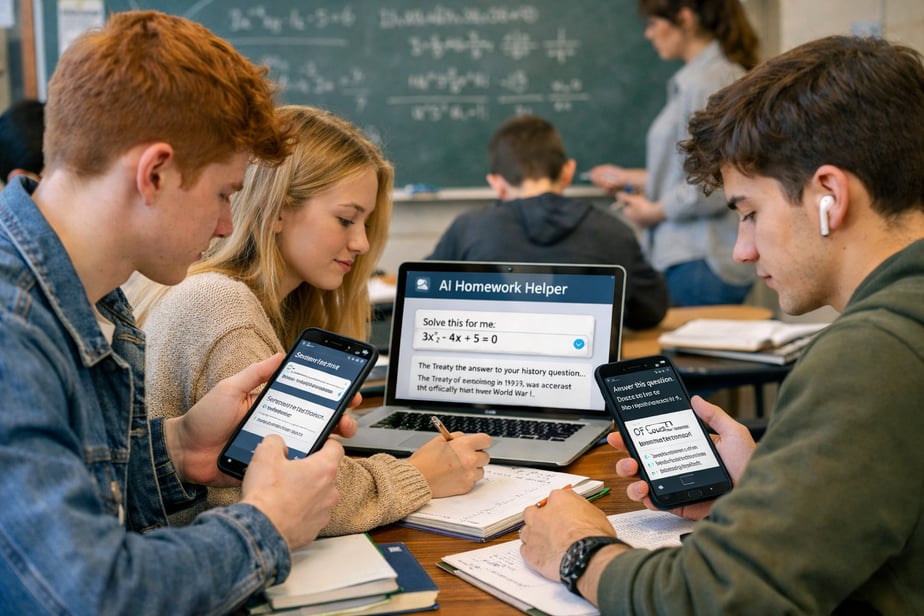
It’s tempting to assume that better technology naturally leads to better outcomes, especially in education, where access to support has historically been uneven.
But learning doesn’t happen in isolated moments.
A student might use an AI tool once, get a clear explanation, and even feel more confident in that moment. But unless that experience repeats itself consistently, unless it becomes part of how they study and practice over time, it rarely leads to meaningful improvement.
What actually drives progress is far less flashy: steady engagement, repeated exposure, and the ability to work through confusion rather than avoid it.
Many early AI tools, including Khanmigo, were designed to respond when students asked for help. In theory, that sounds ideal. In practice, it often means the tool gets used only when a student is already stuck, frustrated, or under pressure.
Over time, that pattern creates something subtle but important.
The tool becomes optional.
And optional tools, no matter how powerful they are, tend to fade into the background.
AI Assistant vs AI Teacher: Why the Distinction Matters
At first, most AI learning tools feel similar.
A student asks a question, gets an explanation, and moves forward. In that moment, the experience works, and it’s easy to see why tools like Khanmigo generated so much early excitement.
The difference tends to show up a few days later.
With assistant-style tools, the experience is naturally reactive. A student opens the tool when they need help, works through a specific problem, and then returns to whatever they were doing. The interaction is useful, but it’s contained to that moment.
There isn’t always a clear connection between one session and the next.
Over time, that pattern can lead to more occasional use. Not because the tool isn’t helpful, but because it doesn’t fully integrate into how a student is already learning day to day.
That’s where many AI learning tools, not just one product, begin to feel more like optional support rather than something students rely on consistently.
Tools that are designed more like a teacher tend to behave differently. Instead of waiting to be used, they create continuity. A student isn’t just asking isolated questions; they’re moving through material, revisiting concepts, and building on previous work in a way that feels connected.
That shift changes how the experience fits into a student’s routine. Instead of thinking, “I’ll use this if I need help,” it gradually becomes, “This is part of how I learn.”
Most students don’t stop using a tool because it isn’t helpful.
They stop because it never becomes part of their routine.
- Ashish Bansal, Founder & CEO of StarSpark.AI
And in learning, that difference, between occasional use and consistent engagement, is what turns short-term help into long-term progress.
Where Khanmigo Fits In
Khanmigo sits firmly within the assistant category.
It’s embedded within Khan Academy and provides contextual help when students ask for it. For students who already know when to seek support, that can be genuinely useful. In practice, though, its usage tends to be reactive.
Students open it when they’re stuck, get guidance on a specific problem, and then move on. What’s often missing is continuity, the sense that each interaction builds on the last and contributes to a larger learning process.
Without that, even helpful experiences can remain occasional.
Why Students Are Choosing StarSpark Instead
StarSpark was built around a different observation.
Most students don’t struggle because they lack answers. They struggle because they lack consistent guidance. That insight changes how the entire system is designed.

Instead of acting as an assistant, StarSpark functions as a Personal AI Teacher, supporting students across the full learning process, not just isolated moments.
Students move through structured learning plans that connect topics, subtopics, assignments, and short, focused lessons. Each session builds on the last, so learning feels continuous rather than fragmented.
Practice is part of the experience, not something separate. Students can generate custom quizzes and flashcards based on what they’re working on, making it easier to revisit material and reinforce understanding without losing context.
As they work, mistakes are identified in real time and turned into learning moments. Instead of skipping past confusion, students are guided through it, which is often where real understanding develops.
The system also adapts to how students naturally approach problems. Whether they’re typing, speaking, drawing, or uploading an image, the experience meets them where they are.
What stands out most, though, is the shift in behavior.
Instead of asking one question and leaving, students tend to keep going. They try another problem, pause, adjust, and continue, more like what happens when someone is guiding them in real time.
Over time, that consistency is what leads to real improvement.