


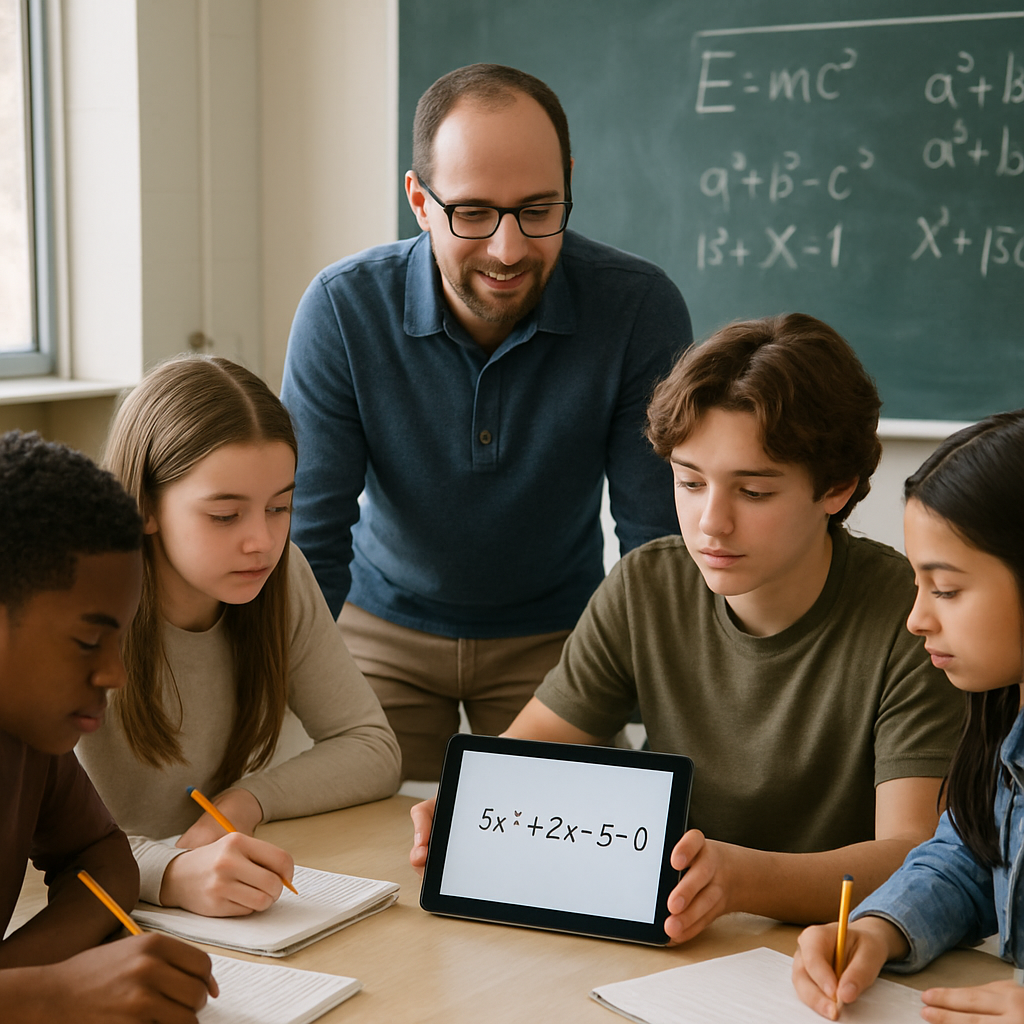
Does the “one chatbot per child” model conflict with how students actually learn?
Understanding this distinction matters for parents, educators, and anyone evaluating AI learning tools.
 What learning science actually shows
- Guided instruction and timely feedback
- Opportunities to explain reasoning, not just produce answers
- Practice aligned to clear learning goals
- Reflection, iteration, and correction
- Support from teachers, parents, or peers
Why “one chatbot per child” raises legitimate concerns
- Function as generic, open-ended chatbots
- Are not aligned to the classroom curriculum or standards
- Optimize for speed and convenience over understanding
- Provide private, unsupervised assistance
- Replace reasoning with instant solutions
The core problem is isolation, not AI
- Disconnect practice from what students are learning in school
- Hide misconceptions from parents and teachers
- Encourage dependency instead of mastery
When AI tutoring effectively supports learning
- Guide students through reasoning step by step
- Encourage explanation and reflection
- Adapt practice based on mastery, not speed
- Align to real curriculum and instructional goals
- Provide visibility into progress for parents and educators
How StarSpark approaches AI tutoring
Many AI tutoring tools are designed primarily to support students when they are stuck and provide quick answers. They respond to questions, explain answers, and move on. That kind of help can be useful at times, but rarely leads to lasting understanding and stronger skills.
StarSpark was designed with a different goal. The AI is built to teach and instruct, not simply to respond. It introduces concepts, guides students through reasoning, and adjusts instruction based on how a student is thinking and their grade-level, not just whether an answer is correct.
Teaching requires structure. StarSpark’s AI operates within a state-standard and grade-level aligned progression so that learning builds over time rather than happening as isolated interactions. Students are not only receiving explanations in the moment. They are developing understanding across topics in a way that reflects how math is taught in school.
Learning also depends on context and visibility. By keeping progress and gaps visible to parents, StarSpark reinforces the broader learning environment that research shows supports student growth.
In this approach, AI functions as part of an instructional system. It supports understanding over time rather than acting as a shortcut for individual problems.
Why structure matters more than personalization alone
- What concept is the student working on right now?
- How does it connect to prior learning?
- What misconceptions are emerging?
- How is progress measured and shared?
How parents and educators should evaluate AI tutors
- Teach concepts rather than just solve problems
- Reinforce classroom instruction
- Encourage students to explain their thinking
- Provide insight into progress and misconceptions
- Complement teachers instead of replacing them
Common questions about AI tutoring
Is AI tutoring bad for kids?
Does AI replace teachers?
Are chatbots effective learning tools?
What should parents look for in an AI tutor?
Key takeaways
- Learning is inherently social, even when tools are personalized
- AI fails when it isolates students from guidance and structure
- Curriculum alignment and feedback matter more than novelty
- Parents and educators should evaluate design, not hype
The future of AI in education
When it is not, it risks becoming a shortcut that quietly undermines learning. The difference is in the educational intent and design.